
A day around the Aso caldera changes completely with the volcano alert level. At 09:24 KST on 20 October 2026, Aso City’s live restriction page showed a first-stage restriction: Level 2 was in force and the area within roughly 1 km of the crater was off-limits. JMA’s latest explanation, issued at 16:00 on 16 October, also continued Level 2 and warned of large ballistic rocks, pyroclastic flows, ash, small wind-carried rocks and volcanic gas. The crater is therefore not a stop on this route. Check both pages again on the day you travel.
Where to check the alert level before you go
Use the live sources in this order. JMA’s Aso activity page supplies the alert level and hazard radius. Aso City’s live restriction page supplies the operating restriction and timestamp; at 09:24 KST on 20 October it showed first-stage restriction and the 1 km zone off-limits. A separate 2 September local visitor notice listed Kusasenri and Aso Sanjo Terminal as accessible after the level was lowered. That dated notice is context, not a substitute for today’s operating page. Reopen the live pages the day before and the morning of travel. People with asthma, bronchitis or heart disease should avoid volcanic-gas exposure.
How far you can go when the crater is closed
At 09:24 KST on 20 October 2026, the live Aso City page prohibited entry within roughly 1 km of the crater under Level 2. The 2 September local visitor notice separately listed Kusasenri, the Aso Volcano Museum area, Aso Sanjo Terminal, Aso City and Aso Station, Aso Shrine, Monzenmachi and Daikanbo as accessible after the level change. Designated detours may allow some hiking outside the restricted zone, but trail access can change after weather or safety inspections. Read the current route map rather than assuming that every lower trail is open.
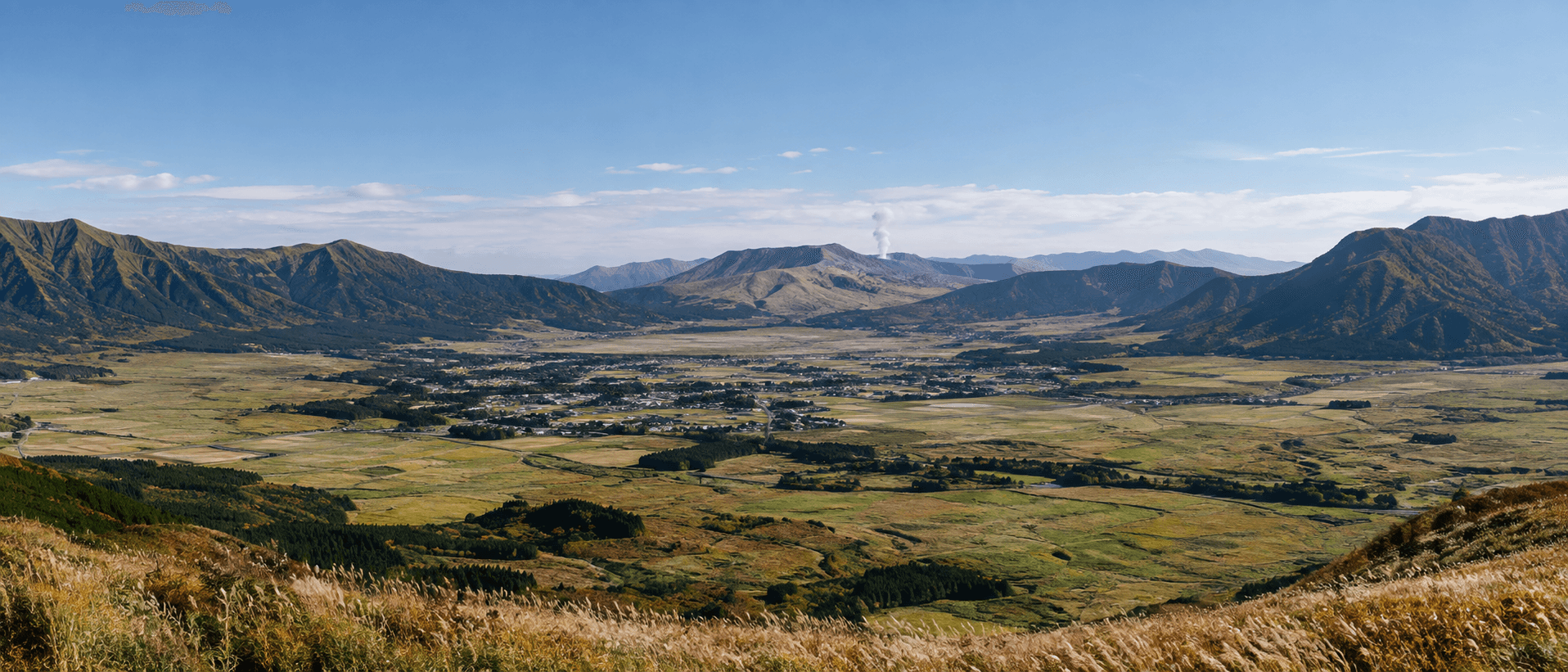
The crater area is divided into zones. Per the council notice, Zone B-1 is the best spot to view the bottom of the active crater, Zone B-2 also shows the crater bottom, and Zone D is an observation deck without a view of the bottom. When Zone E, which admits only a special bus, opens, the toll road to the crater and Zones B-1, B-2, C and D all close. On a closed day the alternative is clear. Watching the steaming Nakadake from the Kusasenri grassland and reading the whole caldera from Daikanbo keep the Aso scenery intact. Sensuikyo Gorge on the eastern side of the caldera is introduced for autumn foliage, which makes it a reasonable addition to a backup route.
Material checked in September 2026 introduces Mount Aso as an active volcano with a huge caldera about 25 km east to west and about 18 km north to south, and gives 30–60 minutes at the crater viewing platform and 40–60 minutes for a Kusasenri walk as typical allocations. A schedule that still works without crater viewing is the safer allocation to pick.
Rental car routes and road conditions
For access from Kumamoto, a car makes it easier to join Daikanbo and Kusasenri, which are away from the railway. Confirm pickup and return locations before paying, and check the road authority and weather on the day instead of relying on a fixed drive-time estimate.
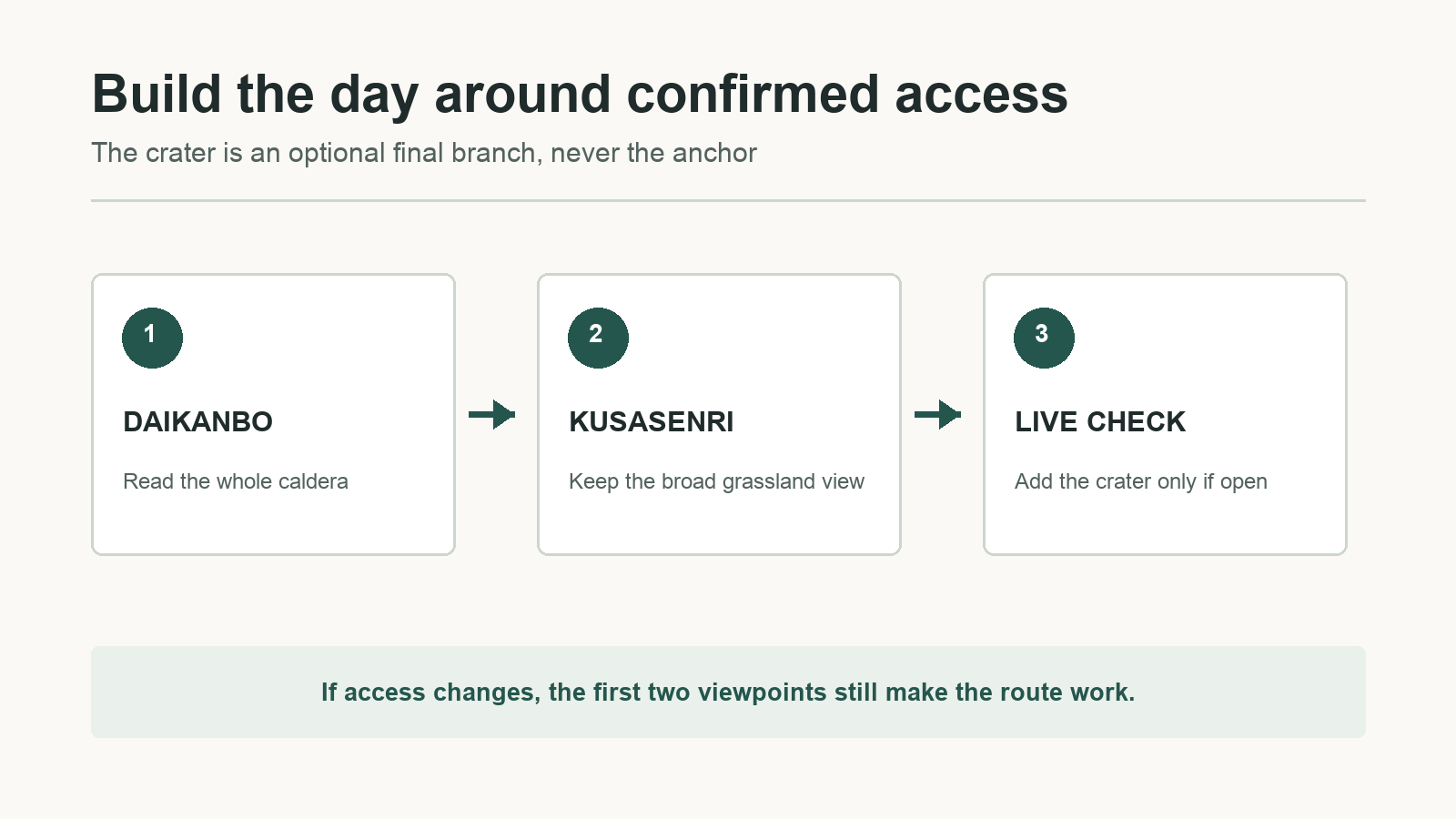
The order should keep the crater optional. On 20 October 2026 we compared the 09:24 live restriction with the dated accessible-area list with three completed drives and tested two sequences using the same fixed stops. Putting Daikanbo and Kusasenri first preserves both confirmed-access viewpoints if the crater remains closed; putting the crater first makes the whole morning depend on a live restriction. That is why this guide orders Daikanbo → Kusasenri → crater only if the official page shows access. It is an editorial route comparison, not a drive-time promise.
Three completed trips show why the fallback matters. Timid Travelers’ March 2026 road trip met wind, rain and low cloud yet still found Daikanbo useful for reading the caldera before Kusasenri. Chonboshi Shiawase’s August 2025 drive reached Daikanbo, then found a roughly 3 km parking queue at Kusasenri, skipped that stop and continued toward the crater; the post mentions dense fog only as a problem on earlier visits. A November 2024 JapanTravel trip report used Kusasenri for lunch before continuing to Daikanbo. The reports disagree on weather and direction, but all support treating the two broad viewpoints as the stable core rather than making crater access the condition for the day.
| Mode | Start from | How the day moves |
|---|---|---|
| Rental car | Kumamoto City and airport | Daikanbo and Kusasenri first; crater only after a live access check |
| Aso Station + bus | JR Hohi Line, Aso Station | Transfer to the bus for Kusasenri/Asosanjo and build around the current timetable |
| Kyushu Odan Bus | Beppu, Yufuin, Kurokawa | Reservation-based, so secure seats before fixing the day |
Can you do it without a car
Yes, but every guide flags the same thing: services are infrequent. The basic route gets off at Aso Station on the JR Hohi Line and transfers to the bus bound for Kusasenri/Asosanjo; from Beppu, one guide runs the Hohi Line to Aso Station and continues by bus. The Kyushu Odan Bus linking Beppu, Yufuin, Kurokawa Onsen, Aso and Kumamoto is reservation-based, so seats need to be secured first. If you will ride several buses over a few days, Klook sells the SUNQ Pass Northern Kyushu e-ticket for 2 or 3 days. Check the pass’s area, validity, excluded routes and seat reservation rules for your route before buying, because the pass does not replace booking an Odan Bus seat.
Shared bus tours leaving Kumamoto City bundle Kusasenri, Aso Shrine, Daikanbo and Kurokawa Onsen into a single-day itinerary, and the product notice states that the tour proceeds with substitute sightseeing when gas or similar causes restrict crater access and viewing. Because the product is shared, stops outside the designated sights are not possible and withdrawal midway is not refunded, so read the conditions before booking. Sightseeing taxi courses based at Aso Station also exist; the stated conditions are a large same-day cancellation penalty and toll and parking fees borne by the passenger.
Without a car, a Fukuoka day tour is the alternative for bundling Aso from Fukuoka, and the Aso Boy! sightseeing train, designed to show the Aso scenery from panoramic seats, is the pick for enjoying the rail ride itself. Fukuoka city to Aso is a long round trip, and one guide advises an early start with the route kept simple.
Summing up
By car, the base plan is morning Daikanbo, the Milk Road and Kusasenri, wrapped inside daylight hours. Without a car, the Aso Station transfer is the base, and with infrequent services the Kyushu Odan Bus or a shared tour is the surer way to bundle the day. The alert level decides crater viewing, so settle the schedule with the council notice the day before departure and on the morning itself.
Last checked: 2026-10-20.
Sources & verification
A source-based guide. Check the linked operator information again before you travel.
- JMA current activity status for AsoSources checked:
- Aso City live crater restriction statusSources checked:
- Aso Volcano Disaster Prevention Council, Aso volcano information and crater accessSources checked:
- Aso Volcano Disaster Prevention Council, eruption alert Level 2 noticeSources checked:
- Japan-guide, Mount AsoSources checked:
- Japan-guide, Aso area access and rental carsSources checked:
- Japan Activity, Aso itinerary guideSources checked:
- Japan Activity, day trips from KumamotoSources checked:
- Sanko Bus, Aso area bus accessSources checked:
- JR Kyushu, Aso Boy! sightseeing trainSources checked:
- Timid Travelers, completed Aso road trip, published 31 March 2026Sources checked:
- Chonboshi Shiawase, completed August 2025 Aso driveSources checked:
- JapanTravel, completed 18-day Kyushu trip report with AsoSources checked:
Images are examples to aid understanding.
Help us keep this note useful
A quick response helps us decide what to clarify or recheck. No account or email is needed.