
You are in a hotel room in Kumamoto, planning tomorrow, and your thumb stops on Aso. You have wanted to see it for years. Then the news gets in the way: an earthquake in July, and something about a volcanic alert level. You have no car. The buses up the mountain run only a few times a day, and you start to wonder what happens if you get up there and cannot get back down.
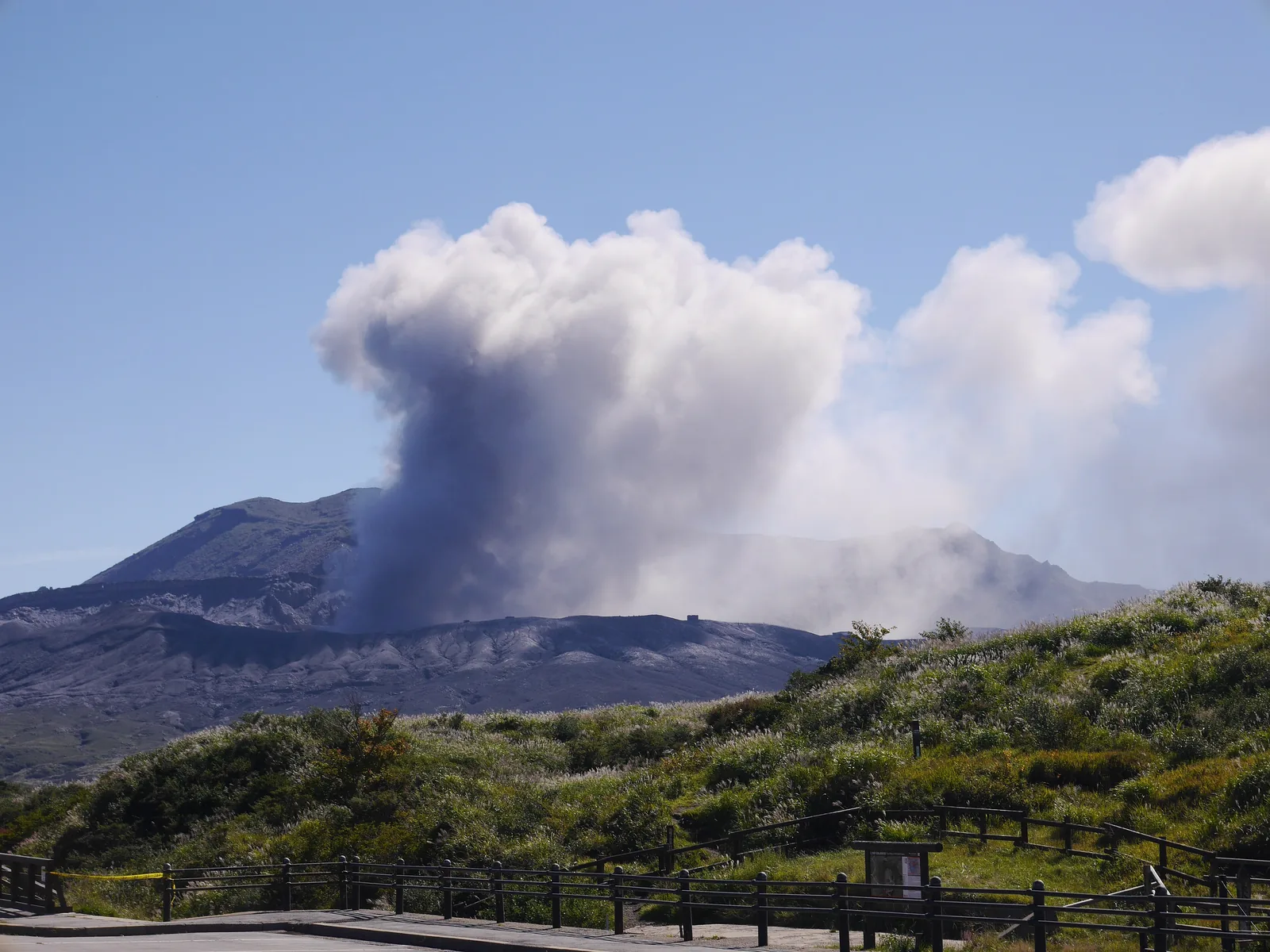
Start with the crater. As of 7 October 2026, the area within about 1 km of Nakadake’s crater is closed, and the shuttle bus that runs to the crater rim is suspended. The Kusasenri grassland, the volcano museum and the bus terminal near the summit are all open. In autumn, the grassland is the place you would spend most of the day anyway.
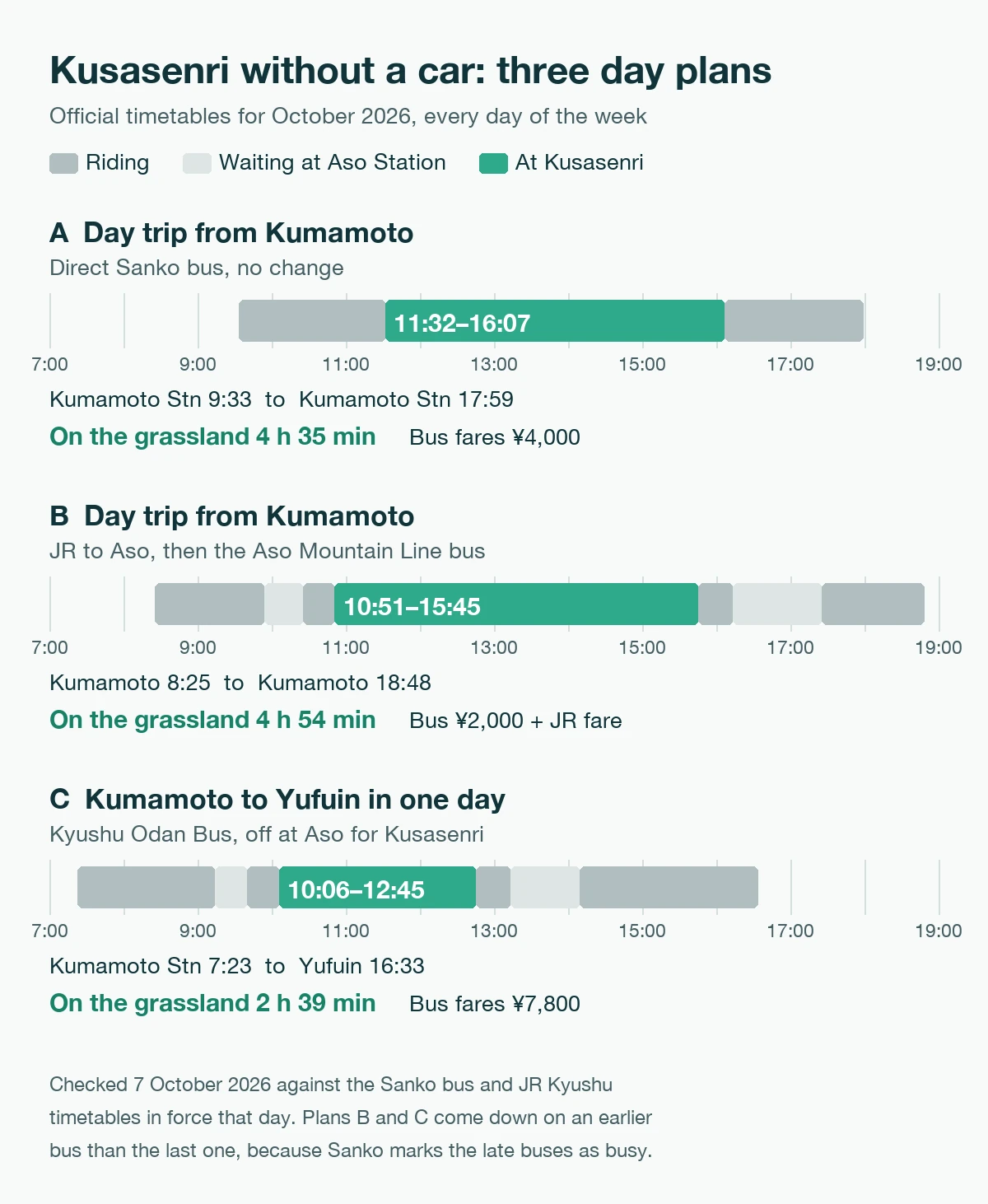
So the real question is not whether you can go, but how to do it without a car. Here is the short answer. For a day trip from Kumamoto, book the 9:33 direct bus from Kumamoto Station. It reaches Kusasenri at 11:32 with no change, and the bus back leaves at 16:07. If you are moving on to Yufuin or Beppu that day, break your Kyushu Odan Bus journey at Aso Station. You still reach Yufuin when you would have anyway, with two and a half hours at Kusasenri in between. If you come down on the Aso Mountain Line bus, aim for one or two buses before the last.
A year when the crater is shut, and still a reason to go
Japan’s Meteorological Agency lowered Mount Aso from alert Level 3 to Level 2 on 1 September. For a little over two weeks from 14 August, while the alert stood at Level 3, everything within about 2 km of the crater was off-limits. That zone is now about 1 km, and the agency’s commentary of 2 October kept the volcano at Level 2. Since 9:00 on 2 September, cars and people can again reach the plaza near the summit.
Level 2 is not a promise of a crater visit, though. The local crater regulation site still carries a notice from 22 January saying crater visits are restricted because of the search after a sightseeing helicopter accident, and no notice since then says they have reopened. The toll road to the crater is closed too, so Sanko Bus lists the crater shuttle as suspended. Do not choose a tour or a taxi on the promise that it goes “to the crater”.

As for the July earthquake, Aso itself came through it lightly. On 2 September the Minamiaso tourism bureau said the Aso area had suffered almost no physical damage and that the main sights and roads were open as normal. The JR timetable for 7 October lists the Hohi Line trains between Kumamoto and Aso as running every day. The section the earthquake stopped is on the Kagoshima Main Line south of Kumamoto, between Uto and Yatsushiro, and normal service there is planned from the first train on 10 October. It is not on the way to Aso.
There is plenty to do outside that 1 km circle. According to the Minamiaso tourism bureau’s 2 September update, the Kusasenri grassland, the volcano museum, the restaurants and cafes at the summit terminal, trails on surrounding peaks such as Mount Eboshi, and, down in the valley, Aso Shrine and Uchinomaki Onsen are all open as usual.
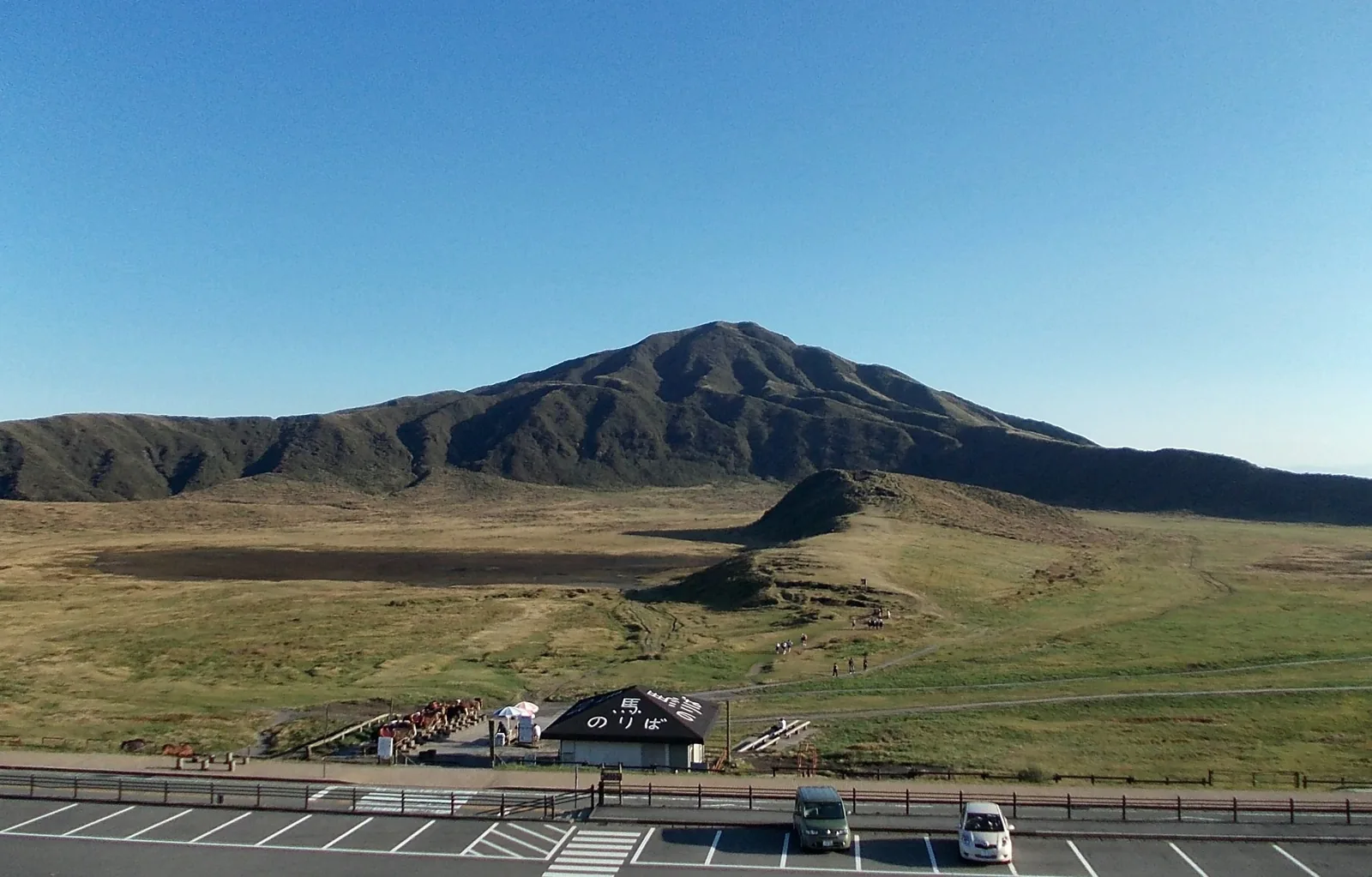

I would not let the autumn slip by waiting for the crater to reopen. Even in normal years, whether the crater area opens is decided just before opening time each morning, depending on volcanic gas and weather, and this year it has been shut since January. The autumn at Kusasenri, by contrast, arrives at much the same time every year. Aso City’s annual events calendar puts the silver grass along the Aso Panorama Line, the mountain road up to the summit plaza, from early October to late November.
A day trip from Kumamoto: one direct bus is enough
Travel blogs about Aso without a car tend to give the same route: JR to Aso Station, then a bus up the mountain. It works. But if you are starting in Kumamoto and have a single day, there is a bus that saves you the change.
Sanko Bus runs one round trip a day on its Aso Sanjo Line. It leaves Kumamoto Station, stop 7, at 9:33, calls at Sakuramachi Bus Terminal (9:45) and Aso Kumamoto Airport (10:29), and stops outside the Kusasenri volcano museum at 11:32. The return leaves Kusasenri at 16:07, reaching the airport at 17:10 and Kumamoto Station at 17:59. The times are the same on weekdays and at weekends.
The fare from Kumamoto Station to Kusasenri is ¥2,000 each way. For ¥4,000 return you get 4 hours 35 minutes on the grassland. That is time for lunch, the museum and a long walk without watching the clock.
You need a reservation for this bus between Kumamoto Station and the summit terminal. Seats go on sale one month ahead, on the same date of the previous month. Sanko sells them through the Japanese site Hassha Orai Net, whose English and Chinese links take you to Japan Bus Online. For an autumn weekend, book the day sales open.
The airport stop is handy too. If you land at Aso Kumamoto Airport in the morning, you can board at stop 3 at 10:29, and the fare from the airport to Kusasenri is ¥1,700. It is still a reserved bus, so book that seat as well. And on your last day, if you fly out in the evening, the 16:07 from Kusasenri drops you at the airport at 17:10.
This bus is not for everyone. If you want to be on the mountain before 9:33, or would rather not tie your descent to 16:07, read on.
By train: longer on the grass, but two changes
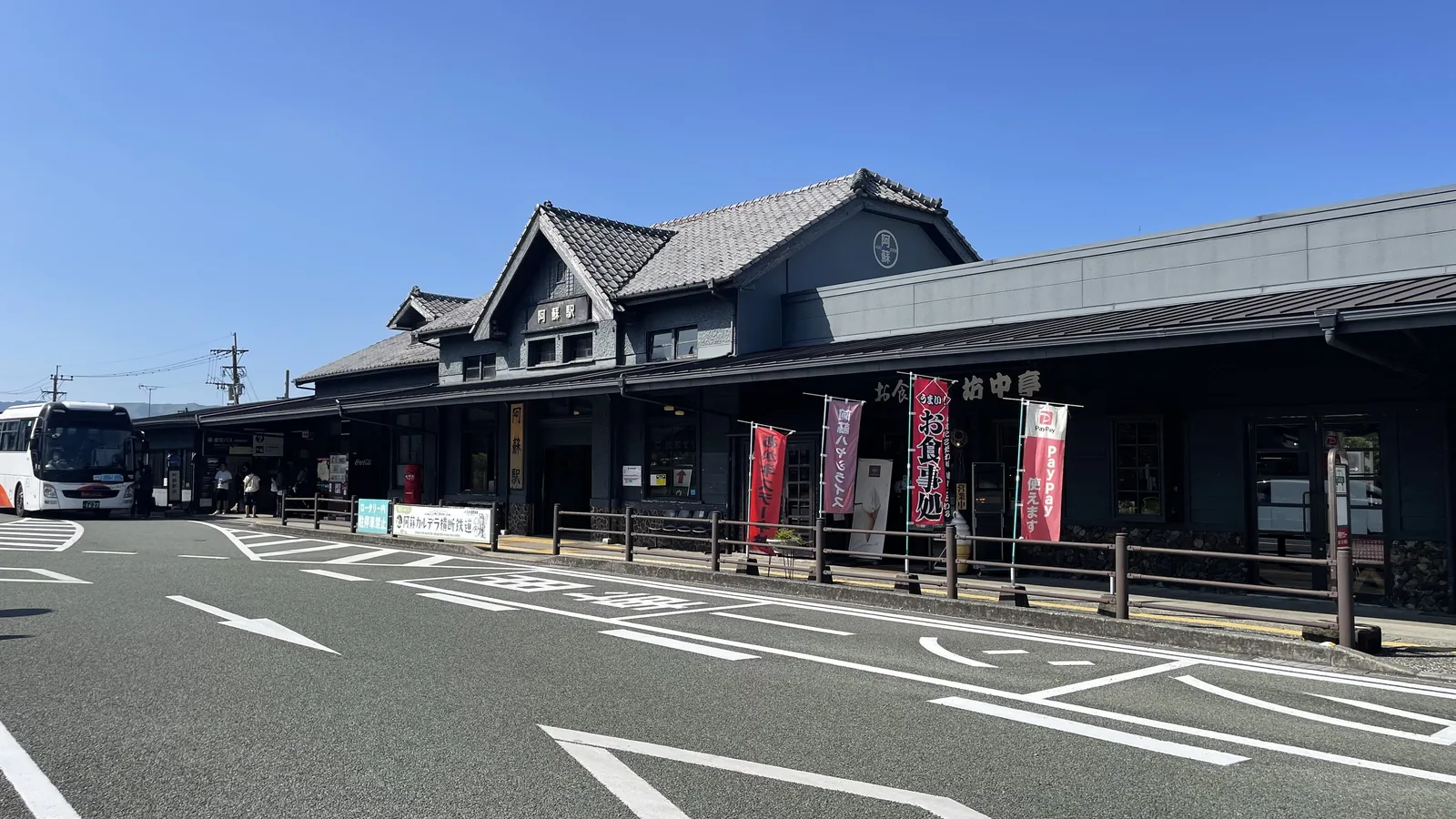
JR gets you to Aso earlier. The daily Kyushu Odan Limited Express 1 leaves Kumamoto at 8:25 and arrives at Aso Station at 9:54. The Sanko Aso Mountain Line bus leaves the station at 10:25 and reaches Kusasenri at 10:51.

On the way back, catch the 15:45 bus from Kusasenri to Aso Station (16:13), then Kyushu Odan Limited Express 6 at 17:25, which gets into Kumamoto at 18:48. That gives you 4 hours 54 minutes on the grassland, 19 minutes more than the direct bus.
The Mountain Line fare from Aso Station to Kusasenri is ¥1,000 each way, so ¥2,000 return. The train comes on top. For reference, JR Kyushu lists the Aso Boy sightseeing train from Kumamoto to Aso at ¥3,080 one way including a reserved seat (the regular-season rate; it varies by date). Check the Kyushu Odan Limited Express fare for your date on JR Kyushu’s booking site. If you are riding on a JR Kyushu pass, the only extra is the ¥2,000 bus, and this becomes the better plan. Whether a pass pays for itself is a separate sum, worked out in our Northern Kyushu rail pass calculation. If it does, Klook sells the JR Kyushu Rail Pass. On 23 October its North Kyushu version came in 3- and 5-day options, and Klook listed free cancellation until the ticket is redeemed.
The train suits three kinds of traveler: people who want to be up early, people staying or stopping near Aso Station, and pass holders. The price is waiting at Aso Station, half an hour in the morning and over an hour in the evening. The bus timetable also says plainly that connections with other transport are not guaranteed. If your train runs late, you wait for the next bus.
The bus down fills up before it reaches you
The thing to look at on this timetable is not the time of the last bus. It is the crowding marks Sanko prints next to each departure.
The Aso Mountain Line bus starts its trip down at the summit terminal and calls at Kusasenri on the way to Aso Station. Of the nine buses down, Sanko marks the five from 13:55 to the last one at 16:35 (Kusasenri times) as usually crowded. On the way up, the first three morning buses carry the same mark. There are no reservations on this line; you board in the order you queue.
Carol, a Taiwanese travel blogger, has done Aso twice by train and bus and wrote up both trips in a guide published in August 2026. On one of them the bus down was already full when it left the summit plaza; at the museum stop only a few people got off, and she could not get on at all. Michelle, an Australian blogger, wrote in October 2025 about a trip around March that year: even outside peak season she found long queues and completely full buses, with even the fold-down aisle seats taken.
The bus down leaves the summit terminal, passes the heliport stop and only then reaches Kusasenri. If it fills up at the top, the people waiting at Kusasenri wait for the next one. So plan your descent around the 15:45 or an earlier bus, not the 16:35. Treat the last bus as your spare, in case the one before it is full.
If you miss even that, there is one more way down. Since July, the Asochiho bus from Takachiho has run via Kusasenri to Aso Station. It leaves Kusasenri at 17:13 and reaches Aso Station at 17:39. But seats between Kusasenri and Aso Station cannot be reserved; you board only if there is room. It is not a bus to count on.
The direct Kumamoto bus also starts at the summit terminal and stops at Kusasenri. The difference is that your seat for the Kumamoto Station leg is reserved. Not having to worry about the bus down is another good reason to choose it.
Moving on to Yufuin or Beppu
If you are taking the Kyushu Odan Bus from Kumamoto to Yufuin, the sums get interesting. Bus 7 leaves Kumamoto Station at 12:08, passes Aso Station at 14:09, and reaches Yufuin at 16:33 and Beppu Station at 17:29. The fare to Yufuin is ¥5,500.
Now take bus 1 at 7:23 that morning instead. Get off at Aso Station at 9:14, catch the 9:40 Mountain Line bus and you are at Kusasenri at 10:06. The 12:45 bus down reaches Aso Station at 13:13. There you board the same bus 7 at 14:09. You still reach Yufuin at 16:33.
The fares add up to ¥7,800: ¥1,800 to Aso Station, ¥2,000 for the Mountain Line both ways and ¥4,000 from Aso Station to Yufuin. You pay ¥2,300 more than the through ticket and get up early, and in return you have 2 hours 39 minutes at Kusasenri. If you are going on to Beppu, it is ¥8,500 against ¥6,000 for the through ticket, ¥2,500 more. I would spend that ¥2,300. You step off in Yufuin at exactly the same time, with the grassland in the middle of your day.
You could stay until the 13:20 bus down and have 3 hours 14 minutes, but that leaves only 21 minutes to change at Aso Station. On the 12:45 you have 56 minutes, and if that bus is full, the 13:20 is still behind it. That is why I would take the 12:45.
You book two separate journeys: bus 1 from Kumamoto to Aso Station, and bus 7 from Aso Station to Yufuin. The Kyushu Odan Bus takes reservations from two months ahead. Sanko notes that some sections cannot be reserved, so check that the booking screen accepts your exact stops.
There is also a train option for Beppu. Take the 15:45 bus down to Aso Station (16:13) and the 16:48 Kyushu Odan Limited Express 5, which reaches Beppu at 18:45. Choose this if you would rather have more time on the grassland.
The direct Kumamoto bus, the Kyushu Odan Bus and the Asochiho are all on the SUNQ bus pass route list, and SUNQ says local buses in its areas are covered too. Whether a pass beats ¥7,800 depends on the rest of your bus trips, which is what our Northern Kyushu pass comparison works through. Klook sells the SUNQ Pass as an e-ticket in Northern Kyushu, Southern Kyushu and All Kyushu versions, with 2-, 3- and 4-day options on 23 October. Its page says some highway buses may still need a seat reservation, so book the reserved buses above as you would without a pass.
Paying the fare: tap a card, carry some cash
Sanko Bus takes contactless card payment on almost all its routes, the Aso lines included. Visa, Mastercard, JCB, American Express, Diners Club, Discover and UnionPay all work, and you tap once when you get on and once when you get off. One card can pay for several people if you tell the driver before you tap to get off.
Carry some cash anyway. Writing about the Kyushu Odan Bus and the Yamabiko bus, Michelle said she ran into a “cash only” situation when paying on board, while noting that card payment now seems to be available. On the ¥1,000 Mountain Line, a single ¥1,000 note covers the fare.
October and November: the dated details
Going by Aso City’s events calendar, the silver grass on the Aso Panorama Line runs from early October to late November each year. Michelle, visiting in early spring, found Kusasenri was not the lush green she had expected. In autumn, expect gold rather than green.
On Sunday 11 October, the Oita and Kumamoto stage of the Tour de Kyushu cycle race passes through. Traffic restrictions around Aso and Miyaji may delay buses, and the 12:23 Asochiho from Aso Station will skip two stops, including the Shirakawa Spring entrance stop. If that is your mountain day, come down earlier than you otherwise would.
If you stay a night
One station from Aso towards Kumamoto is Uchinomaki. The Uchinomaki Onsen hot spring town is open as usual, according to the Minamiaso tourism bureau’s 2 September update. If you sleep in Aso, the 9:05 Asochiho the next morning reaches Kusasenri at 9:31, more than an hour before anyone coming up from Kumamoto by direct bus or train. Seats between Aso Station and Kusasenri on that bus cannot be reserved, so you board only if there is room. If it is full, the next is the 9:40 Mountain Line bus.
Daikanbo, the famous lookout on the caldera rim, is hard to reach by bus. In October 2024 a bus began running from Aso Station to a new stop near the Daikanbo car park. When it opened, it ran twice each way on weekends and public holidays, and route data updated in September 2026 still lists it for weekends and holidays only. From the Daikanbo Iriguchi stop, where weekday buses call, it is an uphill walk of more than 20 minutes. Check the current times with Sanko before you set out.
There is also help with hotel bills. Kumamoto Prefecture’s recovery discount takes up to 60% off stays from 1 October to 25 December, capped at ¥20,000 for a one-night stay, with or without transport. It ends when the budget runs out, and bookings you had already made before it launched do not qualify. The official site lists only two online travel agencies, Rakuten Travel and Jalan. Both are Japanese booking sites, so do not assume your usual international booking site will apply the same discount.
Two pages to read the night before
Check the alert level and the exclusion zone on the Japan Meteorological Agency’s Mount Aso page, and whether the summit plaza is open on the Aso crater regulation site. If neither has changed, the Kusasenri plan stands.
If the closed crater made you hesitate, make this the autumn you go for the grassland instead. Without a car, those few hours fit comfortably into the timetable.
Sources & verification
A source-based guide. Check the linked operator information again before you travel.
- Japan Meteorological Agency: Mount Aso activity and alert levelSources checked:
- Aso volcano crater regulation informationSources checked:
- Aso volcano crater regulation noticesSources checked:
- Minamiaso tourism: Level 3 to 2, restricted and open areas (updated 2 September 2026)Sources checked:
- Sanko Bus: Aso crater shuttle statusSources checked:
- Sanko Bus: Aso Mountain Line (Aso Station–Kusasenri–Aso Sanjo Terminal)Sources checked:
- Sanko Bus: Aso Mountain Line timetable with crowding marks (from 11 May 2026, PDF)Sources checked:
- Sanko Bus: Aso Mountain Line fares (from 1 October 2025, PDF)Sources checked:
- Sanko Bus: Kumamoto–Aso Sanjo Terminal line timetableSources checked:
- Sanko Bus: Kumamoto–Aso Sanjo Terminal fares (from 1 August 2026, PDF)Sources checked:
- Sanko Bus: Asochiho (Aso–Takachiho) timetable from 1 October 2026Sources checked:
- Sanko Bus: Asochiho fares and non-reservable sections (PDF)Sources checked:
- Sanko Bus: Kyushu Odan Bus timetableSources checked:
- Sanko Bus: Kyushu Odan Bus fares (from 1 August 2026, PDF)Sources checked:
- Sanko Bus: reservations and booking windowsSources checked:
- Sanko Bus: contactless card paymentSources checked:
- Sanko Bus: Tour de Kyushu traffic restrictions, 11 October 2026Sources checked:
- JR Kyushu: Aso Station timetableSources checked:
- JR Kyushu: Aso Boy limited expressSources checked:
- JR Kyushu: 2026 Kumamoto earthquake service noticeSources checked:
- Kumamoto Prefecture: Kumamoto recovery travel discountSources checked:
- Kumamoto recovery discount: participating online travel agenciesSources checked:
- Aso City Tourism Association: Asochiho route via Kusasenri from 1 July 2026Sources checked:
- Aso City public relations, November 2024: Aso Panorama Line silver grass (PDF)Sources checked:
- Kumamoto Prefecture tourism: Daikanbo bus stop, weekends and holidaysSources checked:
- SUNQ Pass: route listSources checked:
- Carol's Aso day trip by train and bus (published August 2026, Traditional Chinese)Sources checked:
- Worthy Wanderlust: Aso guide (published October 2025)Sources checked:
Help us keep this note useful
A quick response helps us decide what to clarify or recheck. No account or email is needed.