
Choose the sleeping district before adding stops
A one-night Beppu stay works when the hotel area and the two half-days support each other. Stay in Kannawa if you arrive early enough to walk the hells and want steam lanes after day visitors leave. Stay near Beppu Station if you arrive later, want the widest dinner choice or need an early rail departure. Choose Myoban only when a quiet sulfur-bath stay is the main reason for coming; it adds bus time and makes a full hells circuit less comfortable.
That decision gives the trip a clear shape:
| Arrival and priority | Day 1 | Day 2 |
|---|---|---|
| Before lunch; hells are essential | Kannawa hells, then the two distant hells | Ropeway or Myoban |
| Mid-afternoon; onsen evening matters | Check in and use the inn or Takegawara | Hells, then leave |
| Myoban ryokan is the destination | Travel straight to the inn | One compact sight before departure |
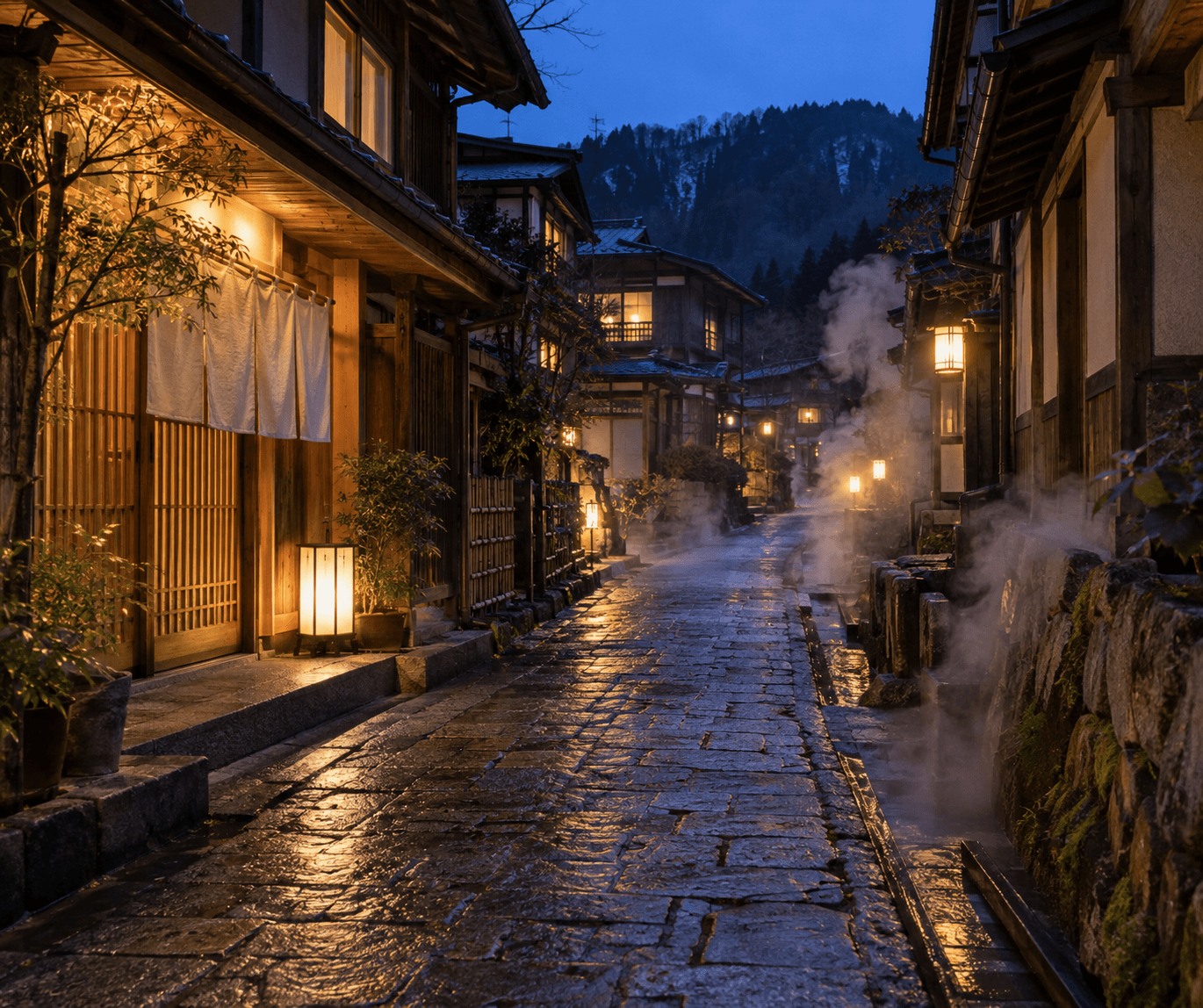
Do the hells on arrival day only when you have a real half-day
The official tourism course allows roughly 3 to 3.5 hours for all seven hells. That is viewing time, not an allowance for luggage, lunch, hotel check-in or a missed bus. Walk the five sites grouped in Kannawa, then use the bus for Chinoike and Tatsumaki. If you reach Kannawa after about 13:00, keep only the sites you most want or move the circuit to day two.
Ticket prices, individual bus fares and the sightseeing-bus calculation change the fastest. Use the separate Beppu hells tickets and buses guide for that decision. The practical distinction here is simpler: local buses let you shorten the circuit. If you instead consider a packaged sightseeing bus, verify its current stops, admission inclusions and reservation rules on the operator page before paying; this guide does not use it in the timing calculation.
The cut-off above comes from a dated comparison made on 20 October 2026. We placed the official 3–3.5-hour complete course against three completed or field-tested itineraries: Yukito’s 25 July 2026 account started the hells after lunch, lingered at the first group and missed Tatsumaki when the evening buses ran out; Mochikuma’s December 2024 trip, published 31 January 2025, protected a 17:30 inn dinner by starting the hells at 09:00 on the second day. Emu’s completed all-seven visit, published 3 September 2026, started with Chinoike and Tatsumaki, took a taxi to Umi Jigoku and then covered the five Kannawa sites on foot. The comparison supports one practical result: an arrival after about 13:00 should trigger a shorter selection or a move to day two, rather than a promise that all seven will fit.
Treat the sand bath as an optional evening stop
Takegawara is useful after check-in only if the hells, dinner and your energy still leave room. Beppu City’s page checked on 20 October 2026 lists the sand bath at ¥1,500, open 8:00–22:30 with final reception at 21:30. It is closed on the third Wednesday of each month, or the following day when that Wednesday is a holiday. Capacity is eight people, reservations are not accepted, and the city warns that waits or an earlier final reception can occur when it is busy.
If your ryokan includes dinner, protect its stated arrival time first. If the inn’s own bath is one reason you booked it, use that bath instead of collecting another stop. A one-night plan loses its value when check-in, dinner and the onsen become deadlines.
On day two, choose the ropeway or Myoban
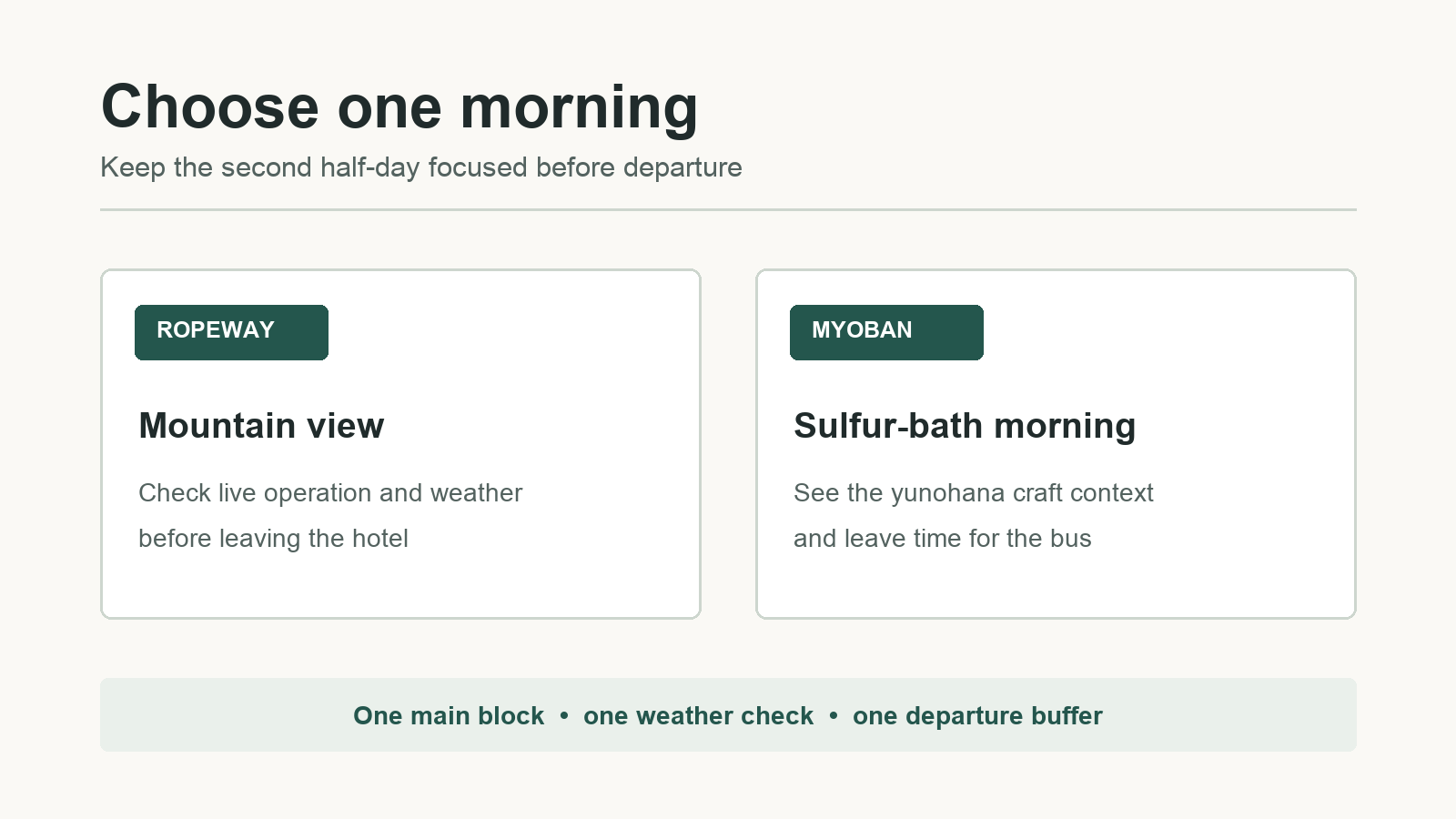
The ropeway and Myoban pull the morning in different directions. Choose the ropeway for the mountain view; its official live page says operation can stop for weather, so check it before leaving. Choose Myoban for sulfur baths and the yunohana craft context documented by Beppu City, then allow for the bus rather than treating the huts as a timed attraction. Trying to complete both before an afternoon departure adds transfers without improving either visit.
This is also why the sleeping district matters. Kannawa keeps the hells close; Beppu Station keeps rail, buses and restaurants close; Myoban keeps the bath experience close. Book the district that protects the part of the trip you would regret missing.
To compare current inventory, use the accommodation lists for Kannawa and the hells or Beppu Station. Enter your dates and party size, then check meal times, the exact room’s bath access and cancellation deadline. The list order is the seller’s, not our ranking.
Do not try to fit all of these into one night: seven hells after a late arrival, a sand bath before a fixed dinner, both the ropeway and Myoban the next morning, and a long transfer out. Keep one main sight block per half-day and let the ryokan stay count as part of the trip.
Last checked: 2026-10-20.
Sources & verification
A source-based guide. Check the linked operator information again before you travel.
- Beppu City: Takegawara OnsenSources checked:
- Beppu Tabi, complete Hells courseSources checked:
- Beppu Tabi, official stay listSources checked:
- Hotels.com, Nogamihonkan Ryokan listingSources checked:
- Japan Activity, Beppu itinerarySources checked:
- Piggyback Japan, Beppu spot guideSources checked:
- Yukito note, Beppu bus and Hells ride recordSources checked:
- Mochikuma travel diary note, Beppu stay recordSources checked:
- Emu note, completed all-seven Hells visitSources checked:
- Beppu Ropeway, operation and weatherSources checked:
- Beppu City, Myoban yunohana production techniqueSources checked:
Images are examples to aid understanding.
Help us keep this note useful
A quick response helps us decide what to clarify or recheck. No account or email is needed.